
Why Loyalty Status Should Guide Your Email Tone

Why Loyalty Status Should Guide Your Email Tone
Marketers spend enormous time optimizing loyalty emails, writing subject lines, personalizing offers, testing message length, and adjusting timing. But there’s a variable most teams overlook: The mindset of the person receiving the email.
New research shows that loyalty members don’t process marketing emails the same way. They interpret messaging differently depending on where they are in the program — and tailoring tone to mindset can meaningfully improve engagement, including open rates and purchase intent.
The Research Behind the Insight
New research published in the Journal of the Academy of Marketing Science — Personalized email marketing in loyalty programs: The role of multidimensional construal levels by Junzhou Zhang and Yuping Liu-Thompkins — reveals how loyalty members’ thinking shifts based on their level and their progress toward the next level.
Using a combination of real campaign data from an airline loyalty program and controlled experimental studies, the researchers tested how email tone interacts with:
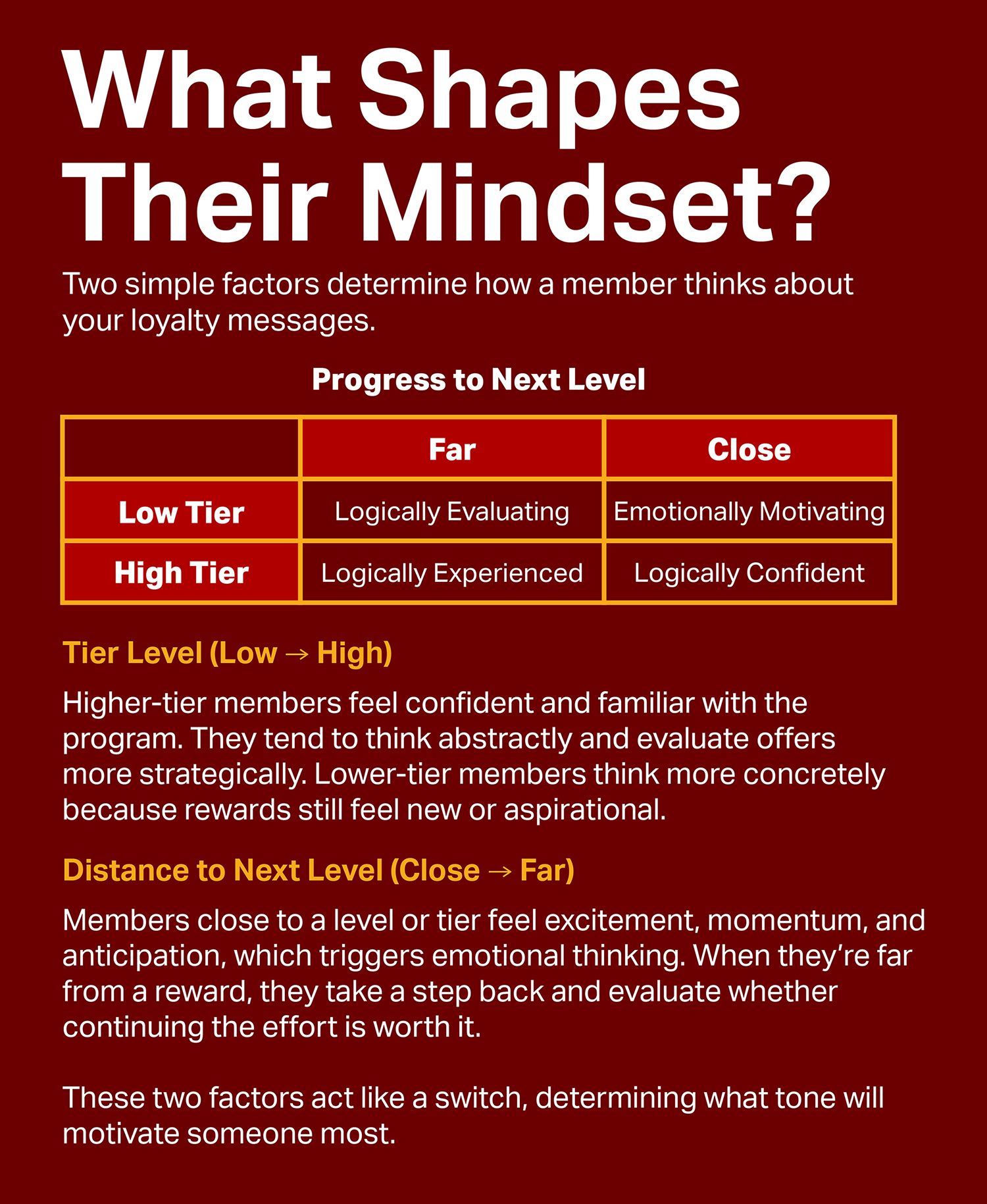
● Tier level
● Distance to the next level
The pattern was clear: Not every loyalty member responds to the same style of message, even if the offer is identical.

Tone Isn’t Cosmetic — It’s Psychological
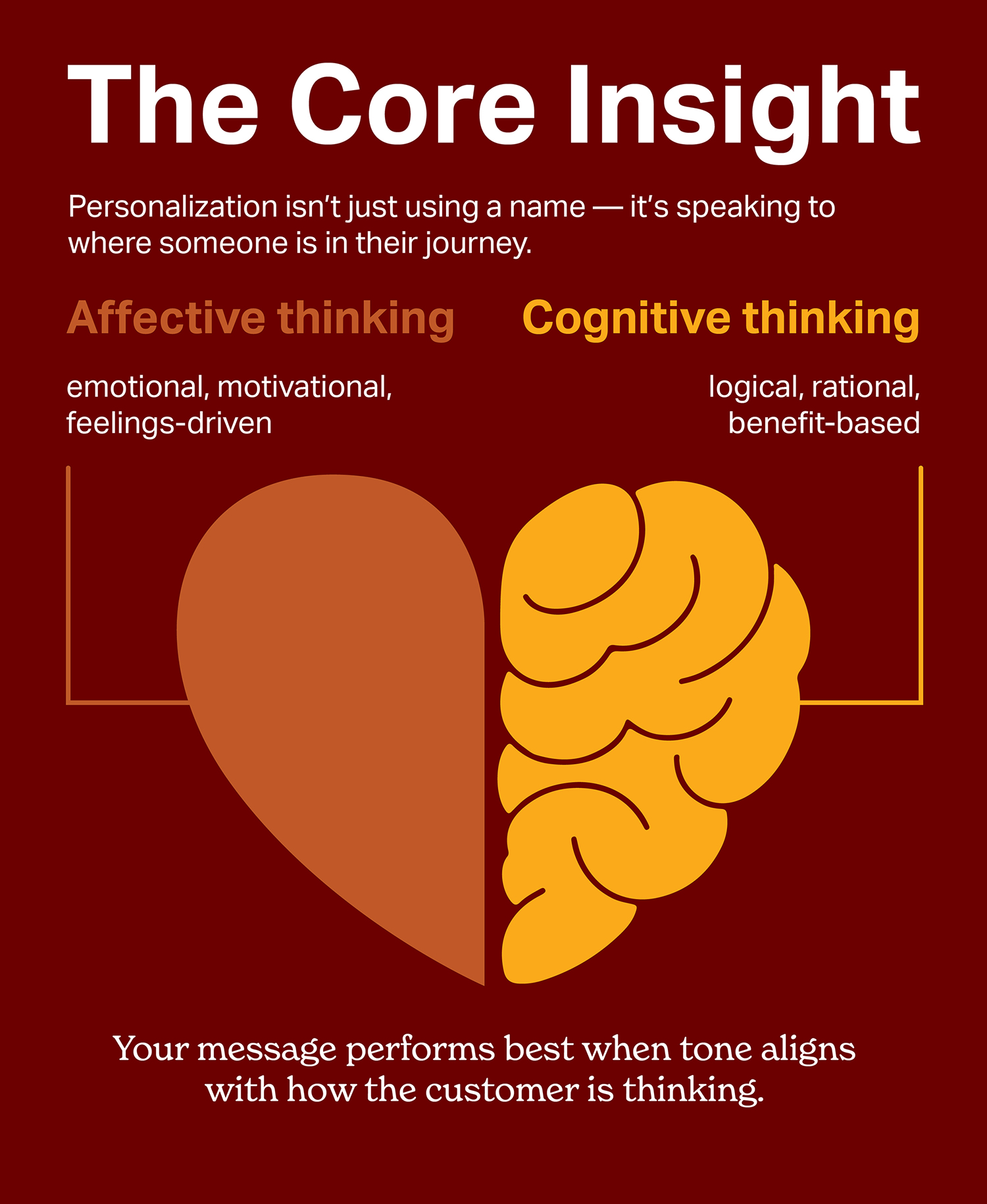
The study found that loyalty members evaluate emails using one of two thinking styles:
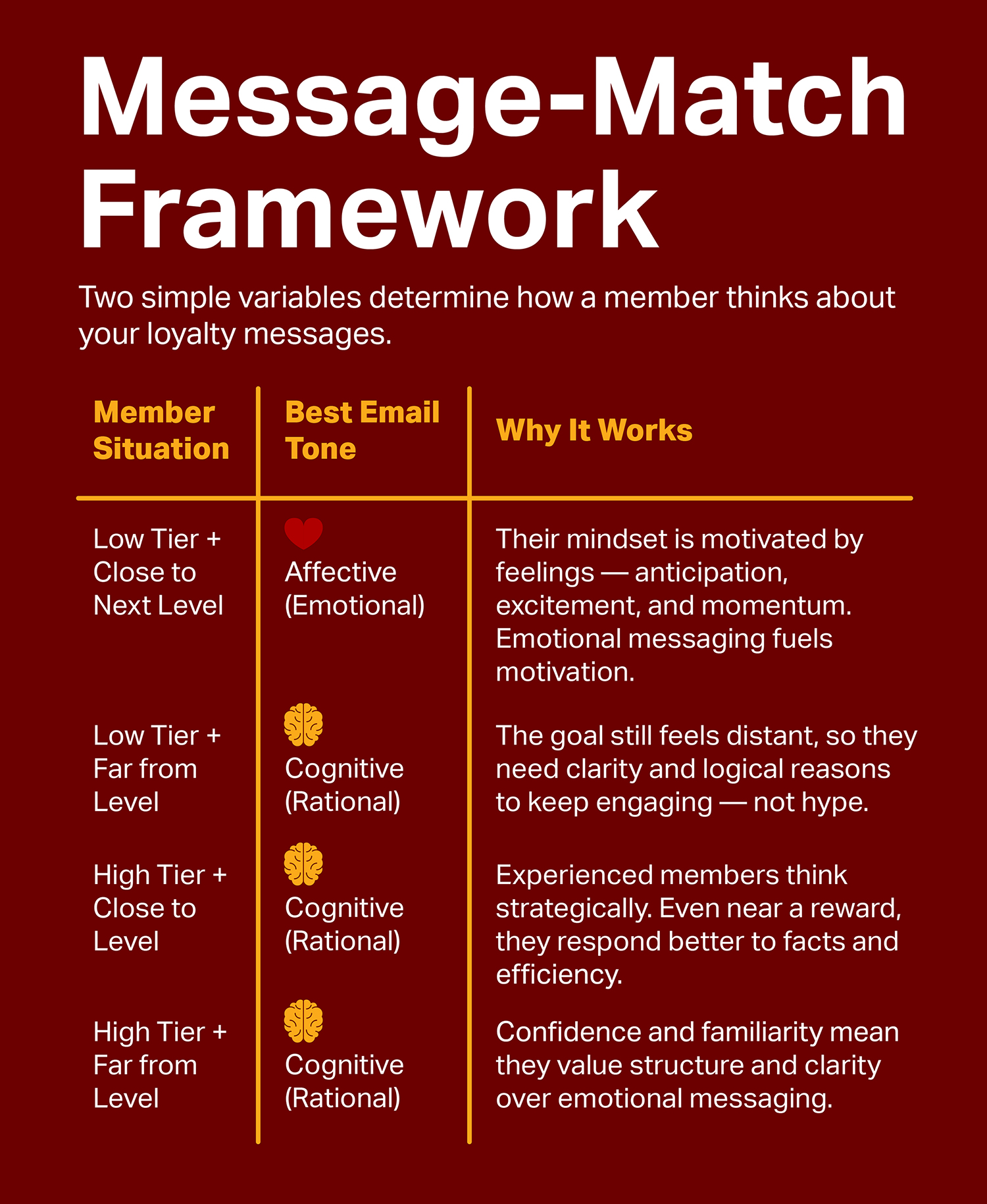
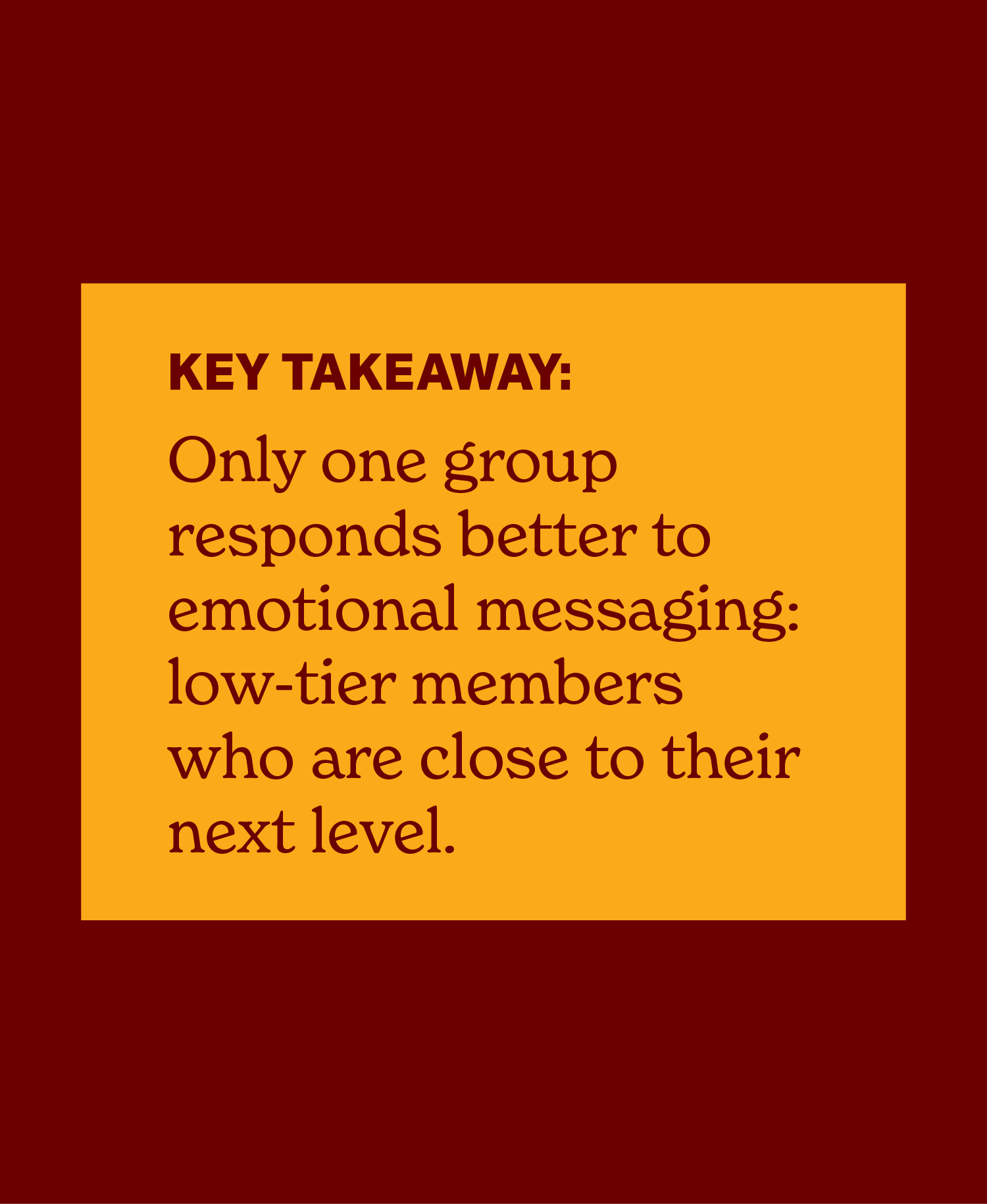
Member Situation: Low Tier + Close to Next Level
Best Email Tone: Emotional
Why This Works: Their mindset is motivated by feelings — anticipation, excitement, and momentum. Emotional messaging fuels motivation.
Member Situation: Low Tier + Far from Next Level
Best Email Tone: Logical
Why This Works: The goal still feels distant, so they need clarity and rational reasons to re-engage.
Member Situation: High Tier + Close to Next Level
Email Tone: Logical
Why This Works: Experienced members think strategically. Clarity and value resonate more than excitement.
Member Situation: High Tier + Far from Next Level
Email Tone: Logical
Why This Works: Confidence and familiarity mean they favor structure and efficiency over emotional tone.
Tone in Action: Examples
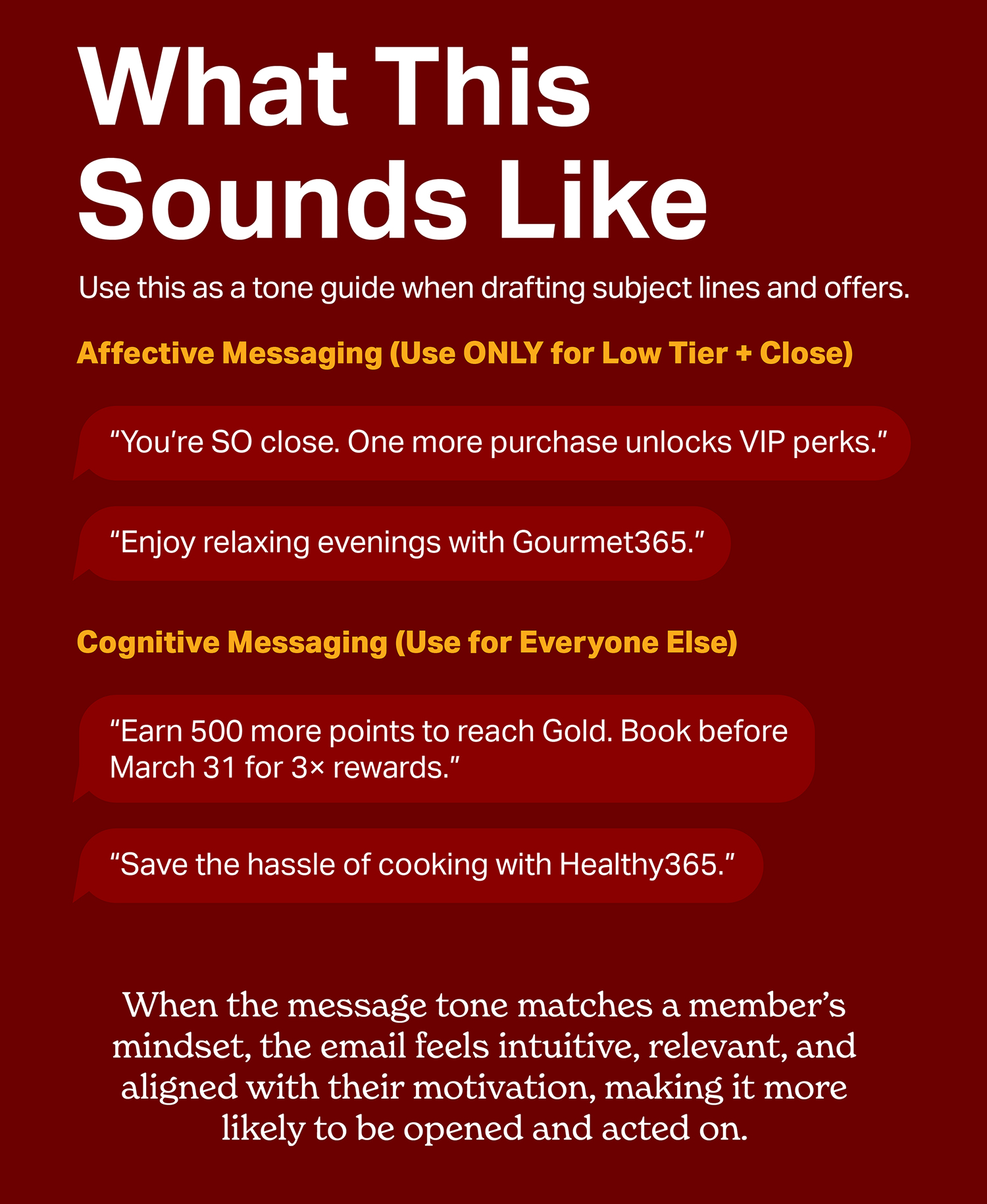
Affective message (use only when Low Tier + Close): “You’re SO close — one more purchase unlocks the next level!”
Logical message (default for most members): “Earn 500 more points to reach Gold. Book before March 31 to maximize progress.”
The study itself used similar tone contrasts, such as:
Affective: “Enjoy relaxing evenings with Gourmet365.”
Cognitive: “Save the hassle of cooking with Healthy365.”
Why This Matters
When tone aligns with member mindset, the message feels natural, relevant, and aligned with motivation, making it more likely to be opened and acted on.
In fact, in real-world campaign data analyzed in the study, tone alignment significantly influenced engagement. In some conditions, emails with matching messaging tone saw open rates more than double compared to mismatched tone.
That means tone isn’t just branding — it’s a lever.
About the Research
Personalized email marketing in loyalty programs: The role of multidimensional construal levels
Journal of the Academy of Marketing Science (JAMS), 2023; Volume 52
Authors:
Junzhou Zhang
Citation:
Zhang, J., Liu-Thompkins, Y. Personalized email marketing in loyalty programs: The role of multidimensional construal levels. J. of the Acad. Mark. Sci. 52, 196–216 (2024). https://doi.org/10.1007/s11747-023-00927-5
From the Authors
Please explain concisely what specific relevant marketing challenge(s) your article addresses.
This research addresses two key marketing challenges in loyalty program management:
How to better understand the psychological mechanisms behind customer behavior in a tiered loyalty program.
How to customize the use of rational vs. emotional messages based on program status when communicating with loyalty program members.
How can the recommendations from your findings specifically be implemented?
To implement our recommended approach, companies need two pieces of information about each program member :their current tier and how far they are from the next tier. When sending marketing messages to members, the messages should focus more on rational, thinking-oriented appeals in the very early stages of consumers ’lifecycle within a loyalty program (e.g., just starting, still at the base tier ,and far from the next tier). This focus should shift to more emotional appeals as base tier members move close to the first premium tier. Once members move up the ladder into the premium tiers, communication strategies should shift again toward cognitive appeals. Table 5 in our paper provides some illustrations of such messages.
What outcomes would be expected?
Our airline study suggests that, when implemented well, companies can expect higher open rates and engagement with their program communications. Our experimental study further shows a positive downstream effect on consumers’ intention to purchase the promoted product or service.